Est. 2019 · Events and conferences · Singapore

Home / Conferences / Hybrid and virtual events
Hybrid and virtual events
Hybrid event management in Singapore
Pixo Events Asia provides hybrid event management in Singapore for conferences, forums, town halls, webinars and ceremonies, and runs fully virtual events too. Our own broadcast crew produces the livestream, and the room and the online audience share one registration, one QR code, one question queue, the same polls and the same captions.

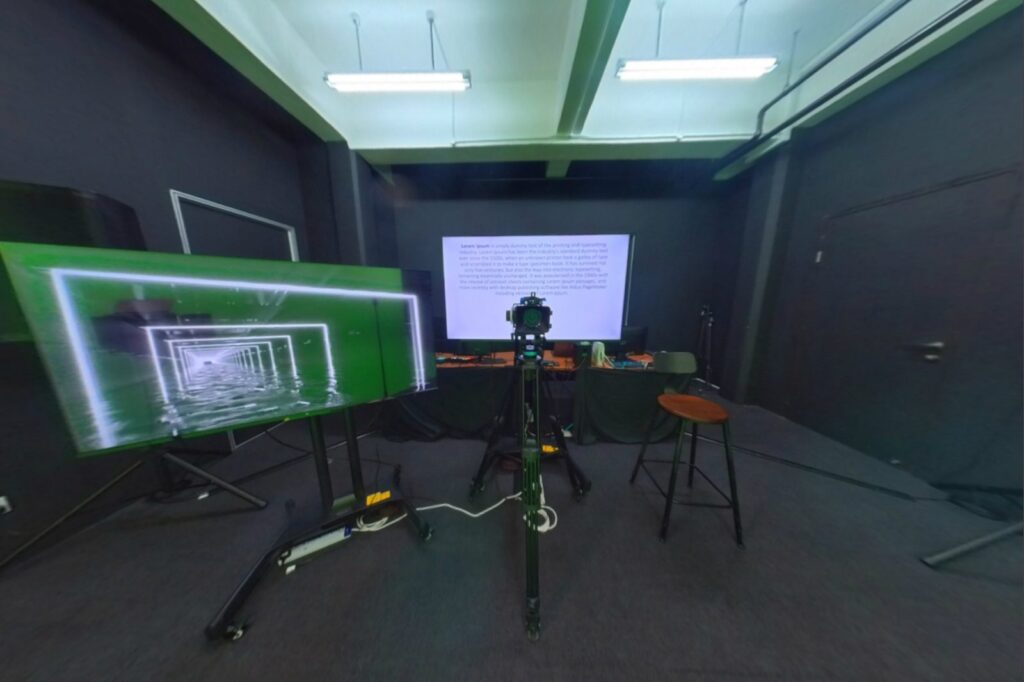
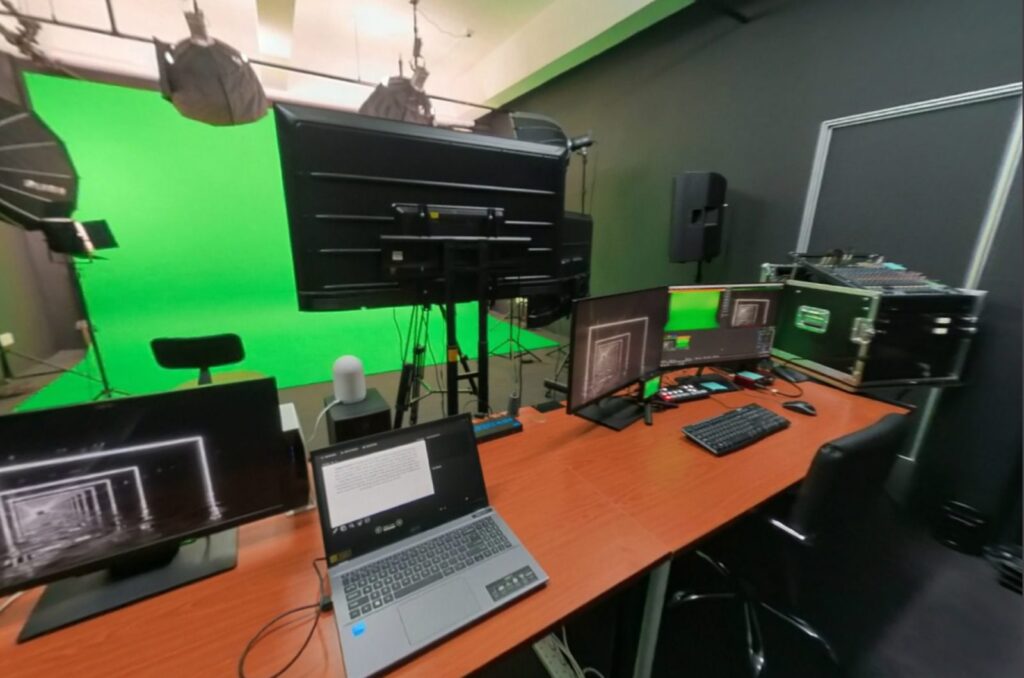
Pixo's Studio in Toa Payoh: the green screen cyclorama, the camera teleprompter and the control desk.
In short
Hybrid event management means running one event for two audiences, people in the room and people online, so that both can follow, ask questions and be counted. Pixo Events Asia is a Singapore event management company and professional conference organiser (PCO), established in 2019, that plans, designs, builds and runs events and runs its event technology in-house. Our in-house broadcast team streams keynotes and panels with at least three cameras and dual hardware encoders.
Formats
Hybrid, virtual or livestream: what is the difference?
Three formats, one production team. The right one depends on where your audience is and what it needs to do. For full conference planning, see our conference organiser page.
Question
Livestream
Hybrid event
Virtual event
Where is the audience?
Livestream
In the room, with others watching online
Hybrid event
In the room and online at the same time
Virtual event
Online only
What does the online audience do?
Livestream
Watches, with captions
Hybrid event
Watches, asks questions, votes and is counted, like the room
Virtual event
Attends sessions, visits booths and networks in a virtual venue
Typical uses
Livestream
Ceremonies for families who cannot travel, launches, town halls
Hybrid event
Conferences, forums, town halls and general meetings
Virtual event
Webinars, online conferences and virtual exhibitions
What we add
Livestream
Cameras, encoders and a stream to your platform or social channels
Hybrid event
One registration, Q&A queue, polls, captions and recap for both audiences
Virtual event
A branded virtual venue with lobby, auditorium, breakout rooms and booths
Plan from
Livestream
With the event plan
Hybrid event
T-21, or T-45 with international speakers
Virtual event
T-14 for a webinar; a virtual venue launches in about two weeks
T = event day.
Two audiences, one event
How we engage the room and the online audience equally
The usual failure of a hybrid event is a second-class online audience: one camera at the back of the hall, questions from home that never reach the stage, and a report that counts only the people who came. We plan it the other way round.
Both audiences sign up on the same registration form, carry the same QR code and post into the same moderated question queue. Polls, live captions and Q&A and the AI recap are shared. The live stream is the only difference, and it runs one way, from the stage to the screen. Afterwards, attendance and engagement are reported separately for the room and online, so you can see what each audience did.
- One moderated question queue with upvotes; the moderator sends questions from either audience to the stage
- Live captions on phones in the room and in the online player, about 0.4 seconds behind the speaker
- Polls and reactions from both audiences on one results screen
- An AI recap of key points, questions, poll results and takeaways, emailed before the room empties
The livestream
How our broadcast team produces the livestream
Virtual and hybrid events are produced by our in-house broadcast team, part of our event production crew. The chain is built so there is no single point of failure between the stage and the online audience.
I
Cameras
At least three cameras for keynotes and panels, so the online audience sees the speaker, the panel and the room.
II
Vision mixing and graphics
Cuts between cameras and slides, with a lower third for every speaker built from the same approved record as their badge.
III
Presentations
Slides and videos play from a dedicated production machine, loaded from the speaker portal, with a redundant machine standing by.
IV
Audio
A broadcast audio mix split from the house sound system, balanced for the stream separately from the room.
V
Encoding and delivery
Dual hardware encoders on independent upstream connections feed a primary delivery network, with a second path running warm. The stream can go to the event platform and, if you choose, your own social channels at the same time.
VI
Recording
Every session is recorded locally and in the cloud, independently of the stream, so a network problem never costs you the recording.
VII
Remote speakers
Remote contributors join through a producer-managed green room with a return feed, after a dry run in their own time zone. Every remote keynote has a pre-recorded backup.
When things go wrong
What happens if the livestream fails?
Each contingency is written so that the crew member already in position can carry it out within two minutes, without waiting for a decision, and each is tested at the T-7 rehearsal.
If this happens
What is already in place
Venue internet drops
What is already in place
A bonded primary connection with cellular backup; the encoder fails over to the second path
The event platform goes down
What is already in place
A static fallback page carries the stream, and check-in continues offline
A remote speaker's connection fails
What is already in place
The pre-recorded backup of their keynote plays, with dial-in audio for questions
A speaker does not arrive
What is already in place
A second moderator, already briefed, takes the session
The slide or graphics machine fails
What is already in place
The redundant machine takes over while the MC bridges
Speakers are in other time zones
What is already in place
Deadlines, dry runs and call times are set in each speaker's own time zone
The wider approach to risk is set out in our method.
Running a hybrid conference, town hall or webinar? Tell us the date, the venue and how many people you expect online. You will have an itemised quotation and a named project manager within three working days.
Virtual events
Fully virtual events in a branded virtual venue
When everyone is online, a video call is rarely enough. As a virtual event organiser we build a branded virtual venue: a lobby, an auditorium with the live stream and slides, breakout rooms, 2D or 3D exhibitor booths, poster displays, and a networking lounge with chat and photo booths. A virtual venue can be live in about two weeks.
The same registration, QR code, captions, polls and Q&A run inside it, and abstracts and posters can sit in it too. After the event you get attendance, dwell time, drop-off, questions and booth visits, with recordings available on demand.
Inside a virtual venue
Lobby
Your branded entrance to every room
Auditorium
Live stream with slides, captions, polls and Q&A
Breakout rooms
Parallel sessions and workshops
Exhibition
2D or 3D booths and poster displays
Lounge
Networking, chat and photo booths
Reporting
Attendance, dwell, questions and booth visits
Timeline
How do we plan a hybrid event in Singapore?
These are the milestones we plan a hybrid conference, forum or town hall to. A webinar runs a shorter version: planning from T-14, registration live at T-10 and a rehearsal at T-3.
I
Kick-off T-21, or T-45 with international speakers
One signed technical specification sheet covers rooms, cameras, stream destinations, captions, remote speakers and what each audience can do. A weekly 30-minute checkpoint follows.
II
Site inspection Before the event plan
We check the venue's network, Wi-Fi and power, find the camera and control positions, and check sightlines.
III
Speakers and registration Speaker portal first
Speakers submit slides, biographies and consent, and remote speakers book their dry run. Registration opens with one form for both audiences.
IV
End-to-end rehearsal T-7
The full show on the venue's own network, with a deliberate failover test. The run-of-show goes out the same week, with a named owner for every cue.
V
Speaker dry runs T-3
Each remote speaker joins the green room to check camera, sound and slides and to rehearse the handover.
VI
Final rehearsal T-1
A last run of openings, transitions and the question flow, after daily stand-ups from T-5.
VII
Signal check Event day
Communications and signal checks two hours before doors. The recording runs independently of the stream, and the incident channel stays open until the last crew member leaves.
VIII
Recordings and report T+1 to T+5
Recordings with corrected, searchable transcripts within 24 hours, and the post-event report within five working days, with room and online figures shown separately.
Town halls, webinars and ceremonies
Livestreams for town halls, webinars and ceremonies
Not every stream needs a virtual venue. A leadership town hall needs a stable stream, one question queue and attendance you can break down by audience; staff can sign in through your own identity provider where single sign-on is part of the package. A webinar needs registration, reminders by email or WhatsApp, captions and a recording on demand. Smaller webinars can run from our livestream studio in Toa Payoh instead of a venue.
A ceremony needs a stream for families who cannot travel. We produce all of these with the same crew and the same rehearsal rules. The Singapore Heart Foundation appointed us its Official Event Management Company for National Heart Week and World Heart Day 2020, which ran virtually. For general meetings with voting, see hybrid AGM and e-voting.
“We appreciate the team’s professionalism and we are very glad to have appointed your company as the Official Event Management Company.”
Jeslin Sin
Director of Programmes, Singapore Heart Foundation · National Heart Week / World Heart Day 2020 (virtual)
Questions
Questions about hybrid and virtual events
What is a hybrid event?
A hybrid event has two audiences at once: people in the venue and people joining online, both following the same programme live. In a well-run hybrid event the online audience can ask questions, vote and be counted like the room. At Pixo Events Asia both audiences share one registration, one QR code, one question queue, the same polls and the same captions.
What is the difference between a virtual event and a hybrid event?
A virtual event happens entirely online, usually in a virtual venue with an auditorium, breakout rooms and exhibitor booths. A hybrid event also has an audience in a physical venue, so it needs stage production, cameras and a stream as well as the online platform. We run both with the same in-house broadcast team.
How much does it cost to livestream a corporate event in Singapore?
It depends on the number of cameras and streamed rooms, where the stream goes (a simple stream page, a virtual venue or your own social channels), remote speakers, captions, extra rehearsals and the length of the day. We do not publish rate cards; you get an itemised quotation, with assumptions and exclusions, within three working days of the scoping call.
How do we plan a hybrid event in Singapore?
Start three weeks out, or six to seven with international speakers. Agree one technical specification, inspect the venue's network and power, open the speaker portal before registration, rehearse end to end at T-7 with a failover test, run speaker dry runs at T-3 and a final rehearsal at T-1, and check signals two hours before doors. See our conference planning checklist.
How do you engage the in-room and online audiences equally?
By giving them the same tools. Both audiences post into one moderated question queue, answer the same polls, read the same live captions and receive the same AI recap, and the moderator takes questions from both. The report shows each audience's attendance and engagement separately, so you can see whether the online audience took part.
What do you need from us before a livestreamed event?
The programme, speaker names and contacts, slides and videos by the speaker portal deadline, brand assets for the graphics, the venue contact for network and power, where the stream should go, who may watch, and whether the recording will be published. At kick-off we send a technical specification sheet that lists every item and its date.
Can you manage virtual events end to end?
Yes. We plan the programme with you, build the virtual venue, run registration and reminders, manage speakers through our portal, produce the stream with our own broadcast team, moderate questions and polls, and deliver recordings, transcripts and the report. One named project manager owns it from first call to final report. See our method.
What internet connection does a hybrid event need?
A tested, dedicated connection for the stream. We use a bonded primary connection with cellular backup, and our dual hardware encoders send the stream over independent upstream paths. We check the venue's network at the site inspection and rehearse on it with a deliberate failover test, so the backup has been used before the event day.
Can remote speakers present from overseas?
Yes. Remote speakers join through a producer-managed green room with a return feed, so they can see and hear the room. Deadlines and dry runs are set in their own time zone, and every remote keynote has a pre-recorded backup, with dial-in audio if the connection fails during questions.
Can sessions be recorded for on-demand viewing?
Yes. Every session is recorded locally and in the cloud, independently of the stream. Recordings and corrected, searchable transcripts are delivered within 24 hours, and the videos can stay available on demand in the virtual venue or on your own channels.
Planning a hybrid or virtual event?
Two audiences. One event.
Send us the date, the venue, how many people you expect in the room and online, and where the speakers are. We acknowledge the same working day and send an itemised quotation, a named project manager and a draft timeline within three working days.
+65 6356 1677 · [email protected]
998 Toa Payoh North, #04-20/21/22, Singapore 318993
About Pixo Events Asia
Pixo Events Asia Pte Ltd is a Singapore event management company and professional conference organiser (PCO), established in 2019 by a leadership team with more than twenty years in Singapore's national, corporate and institutional events. It plans, designs, builds and runs conferences, career fairs, roadshows, festivals, gala dinners, ceremonies and corporate events for government agencies, universities, hospitals and companies, and runs registration, badge printing, speaker and exhibitor management, live captions and event apps on an event technology toolkit its own team runs.
Legal name
Pixo Events Asia Pte Ltd (UEN 201920113M)
Established
2019, Singapore
Team
About 20 event professionals across event management, creative, build and production, led by a team with more than twenty years in Singapore events
What we do
Event management, conference organising (PCO), design and build, stage, AV and livestream, registration and event technology
Term contracts
e2i (career fairs and events) and Nanyang Technological University (conference-style events); roadshows and the SkillsFuture Festival 2026 for SkillsFuture Singapore
Sustainability
Event sustainability management system built to ISO 20121:2024; working towards certification
Office
998 Toa Payoh North, #04-20/21/22, Singapore 318993
Contact
+65 6356 1677 · WhatsApp +65 9146 9897 · [email protected]